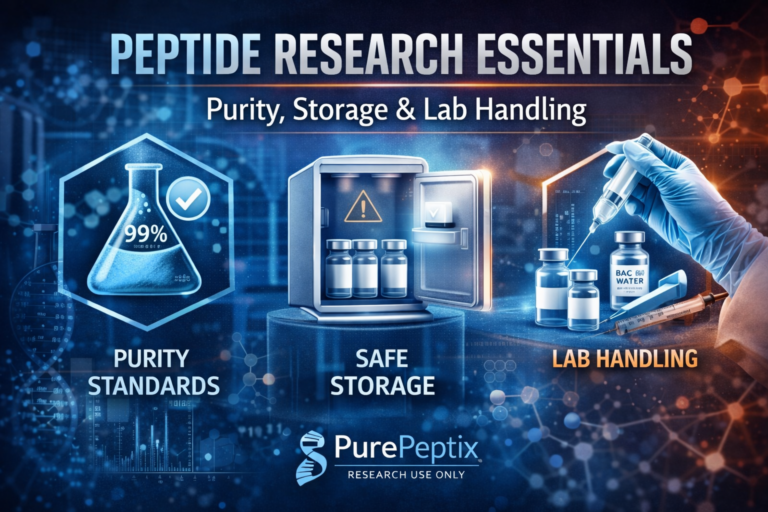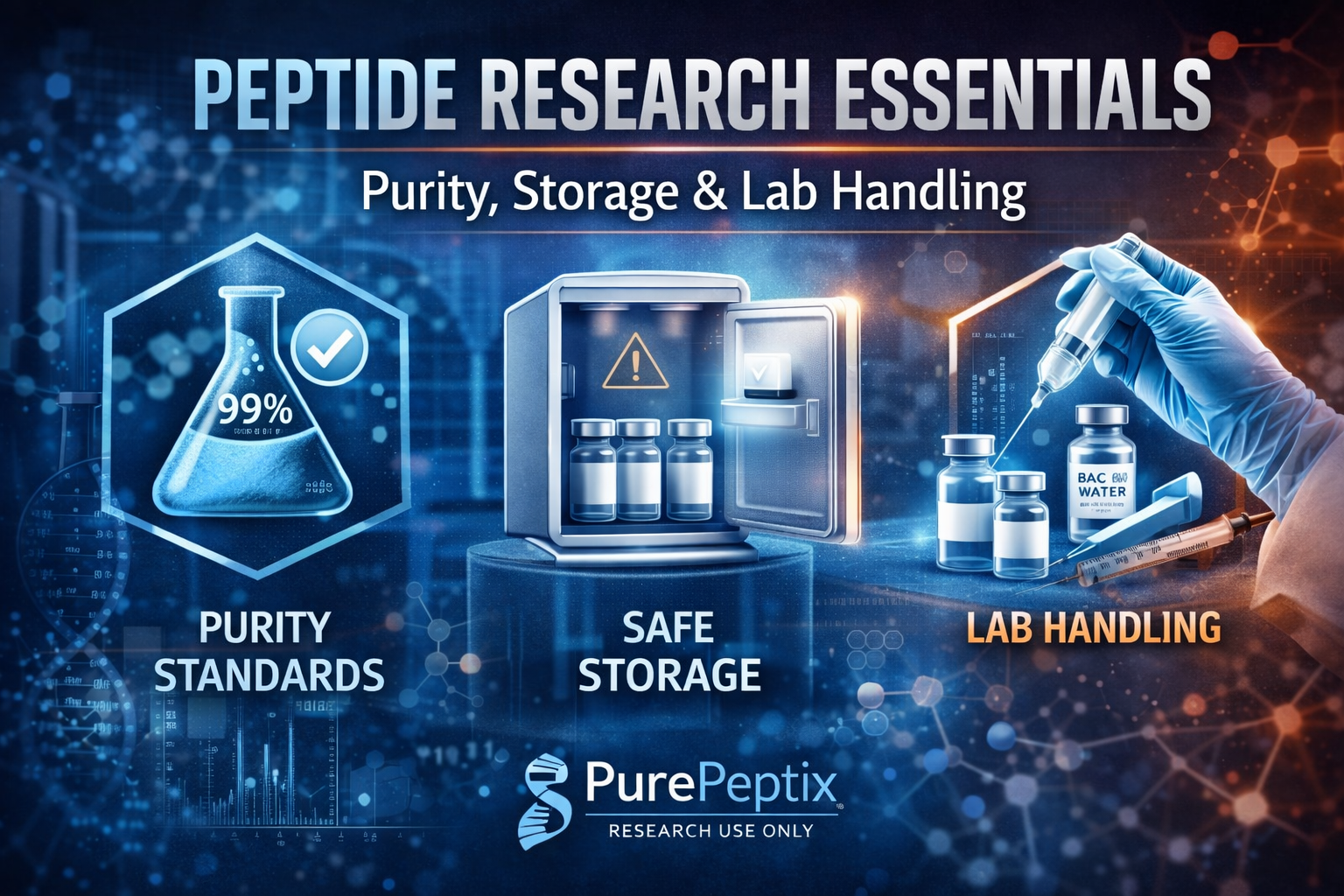
In peptide research, results don’t just depend on the compound itself — they depend on how that compound is sourced, stored, prepared, and handled.
Even the most well-studied research peptide can produce inconsistent or unusable results if purity standards are unclear or laboratory protocols aren’t followed correctly.
This guide breaks down the often-overlooked fundamentals of peptide research: purity, storage, reconstitution, and lab handling — and why these factors matter just as much as the peptide’s molecular design.
Important: All products supplied by PurePeptix are provided strictly for laboratory research use only and are not intended for human or therapeutic use.
Why Peptide Purity Matters in Research
Peptides are highly sensitive compounds. Small impurities, degradation, or contamination can significantly affect:
- receptor binding accuracy
- signalling pathway interpretation
- reproducibility between experiments
- shelf life and stability
What “High Purity” Means in a Research Context
In laboratory environments, peptide purity is typically measured using analytical techniques such as:
- HPLC (High-Performance Liquid Chromatography)
- Mass spectrometry
Higher purity reduces background “noise” in experimental results and improves confidence in data interpretation.
When sourcing peptides, researchers generally look for:
- clear purity disclosure
- proper vial sealing
- consistent batch handling
The Role of Storage in Peptide Stability
Peptides are not shelf-stable in the same way as tablets or powders. Improper storage is one of the most common reasons for peptide degradation.
Best-Practice Storage Considerations
While exact conditions vary by compound, general research handling principles include:
- storing lyophilised peptides in cool, dry environments
- protecting vials from light exposure
- minimising repeated temperature changes
- avoiding moisture exposure before reconstitution
Once reconstituted, peptides become even more sensitive — which is why handling protocols matter.
Reconstitution: Where Most Errors Happen
Reconstitution (mixing a peptide with a sterile diluent) is one of the most critical steps in peptide research — and also where mistakes are most common.
Common Reconstitution Errors
- using non-sterile water
- incorrect volume calculations
- shaking the vial aggressively instead of gently swirling
- touching vial stoppers with non-sterile surfaces
These errors don’t just risk contamination — they can alter peptide structure and invalidate research data.
Why Bacteriostatic Water Is Commonly Used
Many laboratories choose bacteriostatic water (BAC water) as a diluent during peptide preparation.
What Makes BAC Water Different?
Bacteriostatic water contains a small amount of benzyl alcohol, which helps inhibit bacterial growth inside the vial during multi-use laboratory handling.
This makes it suitable for:
- research environments requiring repeated vial access
- maintaining sterility over short research timelines
- reducing contamination risk during sample preparation
PurePeptix supplies BAC water as a lab-grade diluent, designed for research use only.
Handling Peptides: Small Habits, Big Impact
Good laboratory technique matters — especially with peptides.
Research-Standard Handling Practices Include:
- using sterile syringes and needles
- wiping vial stoppers with alcohol swabs
- avoiding direct contact with vial openings
- clearly labelling reconstituted solutions
- following documented dilution calculations
PurePeptix provides a research dosing & mixing guide to help labs understand:
- mg to mcg conversions
- dilution logic
- sterile handling concepts
- storage guidance after preparation
(Always adapt procedures to your lab’s internal protocols.)
Why Category Matters When Selecting Research Peptides
Not all peptides are researched for the same biological questions. That’s why categorisation helps researchers choose the right compound for the pathway they’re studying.
PurePeptix organises peptides into clear research categories such as:
- Metabolism & weight-related signalling
- Recovery & tissue repair pathways
- Muscle & performance research
- Endocrine & body composition studies
- Anti-ageing & longevity research
This structure helps reduce selection errors and improves research clarity.
Consistency = Reliable Research
In peptide research, consistency is everything.
Using the same:
- supplier
- purity standard
- handling protocol
- storage method
across experiments improves:
- data repeatability
- comparison accuracy
- confidence in results
That’s why many labs prioritise suppliers who focus on transparency, documentation, and responsible positioning.
Why Researchers Choose PurePeptix
PurePeptix focuses on supplying research peptides and lab consumables in Australia, with an emphasis on:
- research-only positioning
- clear product categorisation
- lab-focused education
- responsible disclaimers
- quality-first messaging
Rather than making claims, the brand supports researchers by providing information, structure, and lab essentials that help reduce avoidable errors.
Final Thoughts: Research Starts With the Basics
Advanced peptide research doesn’t start with complex protocols — it starts with:
- correct sourcing
- proper storage
- careful handling
- clean preparation
When those fundamentals are respected, research outcomes become clearer, safer, and far more reliable.
To explore research peptides, lab essentials, and preparation guides, visit the PurePeptix product catalogue and educational resources.
About the Author