The price of a handmade rug can give people pause, especially next to a machine-made piece that looks similar from across a room. It is a fair question to ask whether the difference is worth it.
The honest answer is that it usually is, but for reasons that only become clear once you look past the price on the day. The value of handmade rugs shows up over years, in how they wear, how they hold their looks, and how long they stay in a home. Here is what actually sits behind that value.
The real cost is cost over time
A cheap rug that needs replacing every few years is not cheap. Add up several replacements and the disposable option quietly overtakes the quality one, without ever giving you a rug you loved.
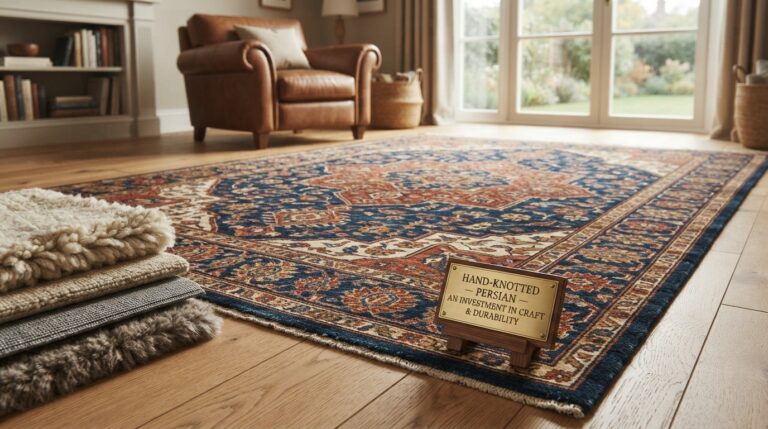
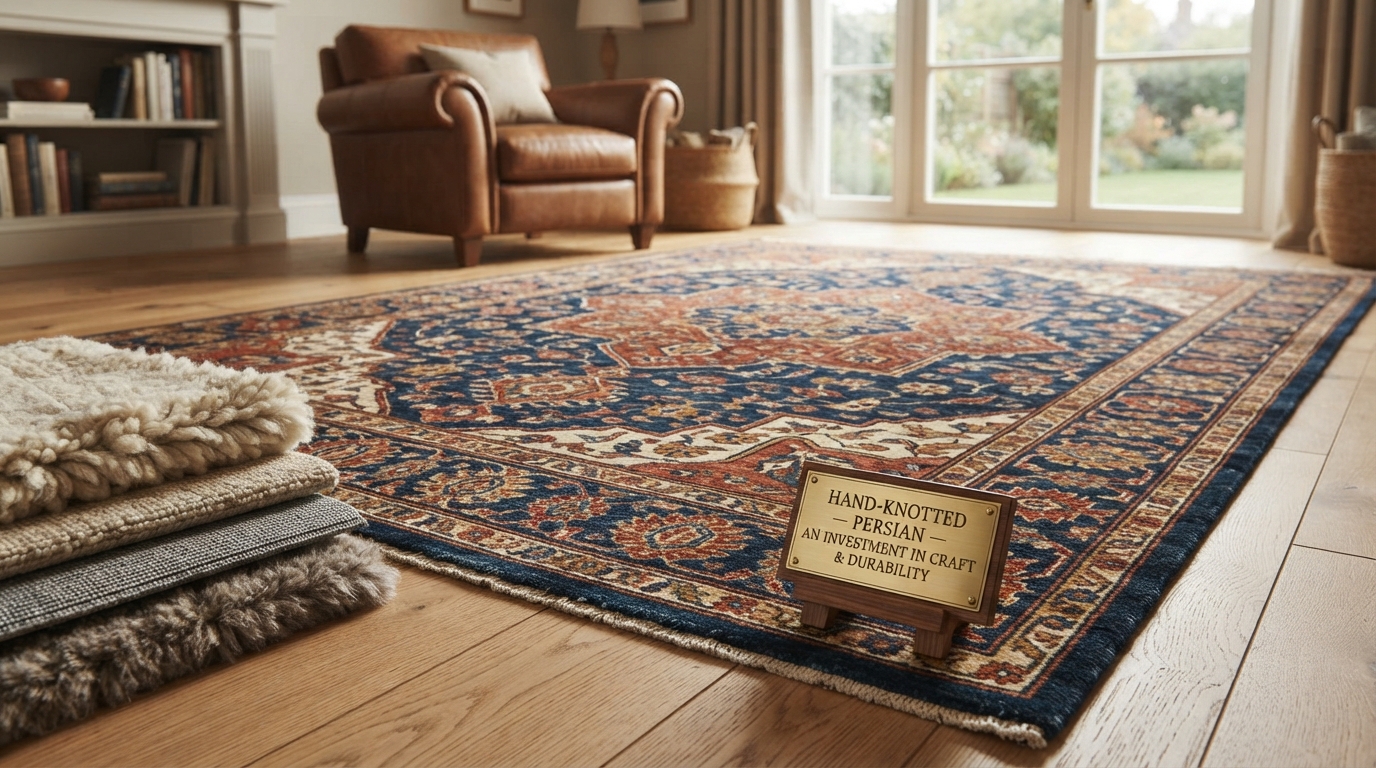
A well-made handmade rug is bought once and kept. Spread across the many years it stays in good condition, its cost per year of use is often lower than the succession of budget rugs it replaces. Judging a rug on its sticker price alone misses the more useful number. It is the same logic people apply to a good pair of boots or a solid piece of furniture, and a rug is walked on harder than either.
Craft you can see and feel
Handmade rugs are made by skilled weavers, and the difference is visible. Hand-worked pile carries subtle irregularities, richer colour transitions, and a depth that mass production cannot quite copy.
That craft is not only cosmetic. A rug made by hand from good wool or silk simply feels better underfoot, and it brings a sense of artistry to a room that a printed synthetic cannot. You are buying a made object, not a manufactured one.
Made to last, and made to be mended
Because they are constructed rather than glued together, quality handmade rugs are built to take years of use and, importantly, to be repaired. A worn edge or a damaged corner on a fine rug can often be restored by a specialist rather than written off.
This is the opposite of disposability. A good rug is designed to be enjoyed for many years and passed on, which is why so many families end up with a rug that has outlived the room it was first bought for.
Design that does not date in a hurry
Trends move quickly, but the designs that define fine rug making have endured for generations because they were considered in the first place. A well-chosen handmade rug tends to work across changes of sofa, wall colour, and even house.
That timelessness protects your money in a quieter way. A rug you do not tire of is a rug you do not replace, and versatility across rooms and styles is part of what you are paying for. A piece bought to suit the room you have now, but chosen with a little restraint, tends to move happily into the next room and the next home.
The heirloom and resale dimension
Fine hand-knotted rugs in particular can hold their value in a way few furnishings do. A quality piece, well cared for, can be handed down or sold on, and antique examples are still traded precisely because they were made to endure.
Very few things you buy for a home can be described that way. It is part of why handmade rugs are often talked about as an investment rather than simply a purchase.
How to make a sound investment
Worth is not automatic. To buy well, match the construction and fibre to the room and its use, ask exactly how and where a rug was made, and buy the best quality you can for the size rather than stretching a budget across a bigger, lesser piece.
A specialist should welcome those questions. Hali has been working with handmade rugs since 1979, across four generations of the same family, and its custom rug program can build a piece to the size, colour and construction a particular room needs, which is often the most sensible way to spend well when a standard rug does not quite fit.
A cost on the day, a value over the years
A handmade rug asks more of you at the outset and gives more back over time: comfort, craft, durability, and a design you can live with for years. Measured over its life rather than its first day, it is very often the more sensible choice, not the more extravagant one.
If you are weighing one up, see a few in person, ask how they were made, and buy the piece you will still be glad to have in a decade. That is what turns a rug from a cost into an investment.
About the Author